
Why Meaning Drift Is Quietly Destroying Conversion, Trust, and Marketing ROI
Most marketing leaders are not struggling because their teams lack talent, tools, or effort. They are struggling because the organization they are trying to scale no longer speaks with a single, coherent voice, even though it believes it does.
Campaigns launch on time. Products ship. AI-generated content increases output. Dashboards show activity. And yet, conversion softens, sales cycles stretch, customer confidence erodes, and marketing ROI becomes harder to defend quarter after quarter.
This is not a performance problem in the traditional sense. It is a structural meaning problem, and it is one of the most expensive failures inside modern enterprises.
The failure is meaning drift.
The Complete Guide to Meaning Drift and How It Derails UX and AI
What Meaning Drift Looks Like Inside a Growing Organization
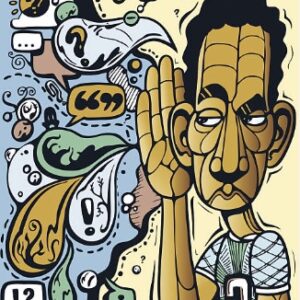
Meaning drift occurs when the same ideas, offers, and promises subtly change meaning across channels, teams, and systems over time. Marketing describes value one way. Product frames it another. Sales emphasizes outcomes the experience never quite delivers. Support explains behavior using language customers have never seen before.
Each version feels reasonable in isolation, and each team is optimizing locally for its own goals. The problem is that customers experience the organization as a whole, not as a collection of departments.
Meaning drifts, causes customers to constantly recalibrate their understanding. They hesitate, reread, or second-guess. They may still convert, but with less confidence and more friction. Over time, many simply stop.
Meaning drift is rarely visible in a single metric. It reveals itself through patterns leaders often treat as unrelated, declining conversion efficiency, rising acquisition costs, longer sales cycles, increased support volume, and growing pressure to optimize harder just to maintain baseline performance.
https://www.nngroup.com/articles/conversion-rates
Why Optimized Funnels Still Underperform
One of the most frustrating realities for CMOs is watching well-optimized funnels quietly lose effectiveness.
Landing pages test well. Teams document messaging frameworks and map journeys, yet performance plateaus or declines.
The reason is simple but uncomfortable. Funnels convert when customers trust their understanding of what is being offered and what will happen next. Meaning drift erodes that trust without ever breaking the funnel mechanically.
When the language used to describe value shifts across touchpoints, customers feel the inconsistency even if they cannot articulate it. The offer sounds familiar but slightly different. The promise feels less concrete. The path forward feels less predictable.
Doubt slows decisions. Slower decisions reduce conversion. Reduced conversion increases pressure on marketing teams to optimize faster, which often introduces even more fragmented messaging in the name of performance.
This is how organizations end up running harder on a treadmill that never moves faster.
Meaning Drift in UX: Why Users Hesitate When Nothing Is Broken
The Hidden ROI Cost of Meaning Drift
The most damaging impact of meaning drift is not what happens externally, but what happens internally as teams try to compensate for it.
Marketing revises campaigns to clarify confusion that should never have existed. Sales spends more time explaining and reassuring. Support answers questions rooted in inconsistent language rather than product complexity. AI outputs require extensive review because the underlying inputs don’t align.
Rework increases. Meetings multiply. Onboarding takes longer. Budget efficiency declines.
Noboy is tracking these costs as meaning failures. They appear as operational overhead, execution friction, or market headwinds. But taken together, they represent a sustained and compounding drain on marketing ROI.
For CMOs under pressure to justify spend, this erosion is especially dangerous because it is diffuse, hard to isolate, and rarely attributed to its true cause.
Why CMOs Are Losing Millions in ROI Due to Message Breakdown
Why AI Accelerates the Problem Instead of Solving It
AI does not introduce meaning drift. It exposes it.
When organizations apply AI to content creation without first stabilizing meaning, they automate inconsistency. AI systems are trained on whatever language already exists, which means they confidently reproduce and remix ambiguity at scale.
The result is content that sounds polished, authoritative, and wrong in subtle ways that undermine trust. Organizations respond by adding review layers or restricting usage, but this treats the symptom, not the cause.
AI readiness is not a tooling issue. It is a semantic one. Without shared definitions, aligned intent, and governed meaning, AI becomes a force multiplier for confusion rather than clarity.
Content-First Is AI-Ready — Are You?
View AI intelligence from Sloan MIT
Why This Is a Leadership Issue, Not a Content Problem
Meaning drift persists because most organizations treat content as an output rather than infrastructure.
Standards exist, but they govern tone and style rather than meaning. Design systems manage components, not intent. Messaging frameworks live in slide decks instead of operational workflows. Governance focuses on approvals instead of coherence.
As a result, meaning evolves independently across teams, even when everyone is acting in good faith.
Meaning drift cannot be solved with a copy refresh or a brand campaign. It requires leadership alignment around how meaning is defined, maintained, and scaled across the organization.
HBR – Organizational Alignment is the Key to Digital Transformation
How the Content-first Framework Prevents Meaning Drift
The Content-first Framework addresses meaning before execution begins.
It establishes shared definitions across marketing, product, sales, support, and AI systems. In addition, the framework aligns language to intent and treats terminology, narrative, and promise as strategic assets rather than decorative elements.
When meaning is stabilized, everything downstream improves. UX becomes clearer without constant redesign. Conversion improves because customers trust their understanding. Grounded in consistent inputs, AI output becomes more reliable. Marketing ROI increases because effort compounds instead of canceling itself out.
This is not about adding process. It is about removing the hidden friction that quietly taxes every initiative.
The Complete Guide to Meaning Drift and How It Derails UX and AI
The Question CMOs Should Be Asking Now
The question is not whether your organization is producing enough content, running enough experiments, or adopting AI quickly enough, but rather, does your organization has a shared, enforced understanding of what its words mean, and whether that understanding is embedded structurally rather than stylistically.
Because when meaning drifts, conversion slows, trust erodes, and ROI follows. And by the time the numbers make that clear, the damage has usually been accumulating for years.