
Artificial intelligence is quickly moving from experimentation to implementation. Organizations are building Custom GPTs trained on internal knowledge, experimenting with agentic AI systems that can execute tasks across tools and workflows, and asking how AI can accelerate everything from marketing to customer support. The potential is enormous. AI promises speed, scale, and automation in areas that once required large teams.
But many organizations are about to encounter a problem that has very little to do with the technology itself.
The issue is not model quality. It is not prompt engineering. It is not whether a company chooses the right AI platform. The deeper problem is that many organizations are not aligned on the meaning of the language that runs their business. When that underlying meaning is unstable, AI does not correct the problem. It amplifies it.
This is why a content-first framework is becoming increasingly important as companies move toward Custom GPTs and agentic AI. Before AI can operate reliably inside an organization, the organization must first establish a stable layer of shared meaning.
What are Custom GPTs and why are organizations building them?
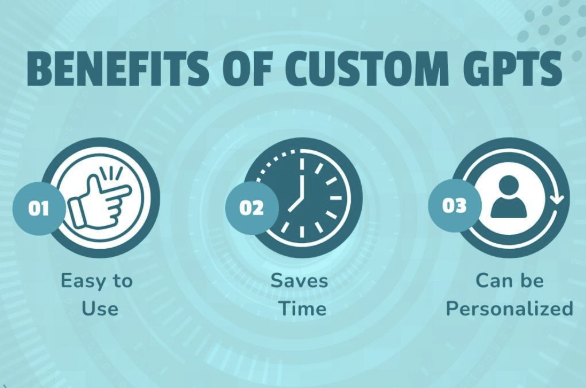
Custom GPTs are AI assistants designed to operate inside the knowledge environment of a specific organization. Instead of relying solely on general internet knowledge, they are configured using internal documentation, product descriptions, support materials, training resources, and messaging frameworks.
Companies are building Custom GPTs for many different purposes. Internal knowledge assistants can help employees quickly find answers to operational questions. Customer support teams can use AI to surface solutions more quickly. Sales teams can use AI to explain products or services consistently. Marketing teams can use AI to generate messaging that aligns with existing strategy.
In theory, this allows organizations to turn their internal knowledge into a scalable assistant that can support teams and customers simultaneously.
However, the effectiveness of a Custom GPT depends entirely on the quality and consistency of the content it is built on. AI does not invent a stable understanding of the organization. It learns from the information it is given.
If that information contains inconsistent definitions, conflicting explanations, or fragmented messaging, the AI will reproduce those inconsistencies.
What is agentic AI and why does it change the equation?
Agentic AI refers to systems that can take action rather than simply generate responses. Instead of answering a question and stopping there, an AI agent can evaluate information, make decisions based on defined rules or goals, and trigger workflows across systems.
For example, an agent might monitor product usage and trigger customer success outreach. It might analyze support tickets and surface patterns that suggest a product issue. It might coordinate information from multiple systems to generate operational reports.
The defining characteristic of agentic AI is that it connects reasoning with action. The system interprets information and then does something with that interpretation.
This capability dramatically increases the importance of reliable meaning inside the organization. When an AI agent misinterprets language, the result is not simply an inaccurate answer. It may lead to an incorrect action.
This is where small conceptual inconsistencies can begin to produce operational consequences.
Why do many AI initiatives produce inconsistent results?
Many organizations approach AI as a technical challenge. Leadership teams evaluate models, infrastructure, integrations, and deployment strategies. These considerations are important, but they do not address a deeper layer that AI systems depend on.
AI systems operate through language. They interpret documentation, prompts, and knowledge sources. If the organization’s language contains inconsistent meanings, the AI inherits that inconsistency.
This often becomes visible in subtle ways. A Custom GPT may provide different explanations of the same product depending on which document it references. Internal teams may ask similar questions and receive slightly different answers. AI-generated messaging may drift away from how the organization actually describes its offerings.
These inconsistencies are frequently attributed to AI limitations. In reality, they often reflect existing inconsistencies in the organization’s own content and documentation.
AI simply makes the problem easier to see.

What is meaning drift and how does it affect AI systems?
Meaning drift occurs when teams within an organization gradually develop different interpretations of the same concepts. Over time, the language that once guided decision-making begins to shift.
This often happens as organizations grow. Marketing may adapt terminology to support campaigns. Product teams may redefine terms to match new features. Customer support may adjust explanations based on real-world customer conversations.
Each of these adjustments may make sense locally. However, when they accumulate, the organization’s language begins to lose coherence.
Humans are often able to navigate this situation through conversation and context. AI systems cannot do this reliably. They interpret information based on the data they receive.
If the data contains multiple definitions of the same concept, the AI may treat all of them as equally valid. The result is inconsistent outputs that appear confusing or unreliable.
In effect, the AI is reflecting the organization’s own conceptual fragmentation.
How does a content-first framework stabilize meaning before AI is deployed?
A content-first framework begins with the recognition that language structures the entire digital experience of an organization. Products, marketing, documentation, and support all depend on shared definitions.
Instead of starting with interfaces or templates, a content-first approach starts with clarifying the core concepts that define the business. This includes establishing shared definitions for key terms, aligning messaging across teams, and ensuring that documentation reflects a consistent conceptual model.
Once this meaning layer is stable, content systems can be built on top of it. Websites, knowledge bases, product interfaces, and marketing materials all reinforce the same conceptual structure.
When AI systems are introduced into this environment, they operate on a much stronger foundation. Instead of learning from fragmented or contradictory information, they learn from content that reflects a shared understanding of the organization’s language.
How does content-first design improve the reliability of Custom GPTs?
Custom GPTs rely heavily on the quality of the knowledge base they reference. When that knowledge base is built around a stable meaning structure, the AI model is far more likely to produce consistent and trustworthy responses.
For example, if product categories, service definitions, and value propositions are clearly defined and consistently documented, the AI will draw from those definitions when generating answers. This leads to responses that align with how the organization actually thinks about its offerings.
Without that structure, the AI must reconcile conflicting explanations scattered across documents and sources. Even sophisticated models struggle to resolve these conflicts consistently.
Content-first design addresses this problem by strengthening the knowledge layer before AI systems are deployed.
Why is meaning alignment even more important for agentic AI?
Agentic AI systems rely on clear conceptual models in order to make decisions. When an agent evaluates information and triggers actions, it must interpret terms and categories accurately.
If key concepts such as customer value, product usage stages, or service tiers are defined differently across systems, the agent may act on incomplete or conflicting interpretations.
For example, an AI agent designed to identify high-value customers might rely on definitions of activation, retention, or adoption that differ across teams. Without consistent meaning, the agent’s decision logic becomes unstable.
When organizations align meaning across their content and documentation, agentic AI systems can operate more confidently. The agent is not guessing what terms mean. It is working from a shared conceptual framework that reflects how the organization actually operates.
How can organizations prepare their content for AI?
Preparing for AI begins with evaluating the clarity of the organization’s existing language. Many companies discover that important concepts are defined differently across teams or documents.
A content-first preparation process typically involves identifying the core concepts that structure the business, aligning definitions across departments, and ensuring that documentation reflects those shared definitions.
This process also helps eliminate conflicting terminology and clarify how products, services, and customer outcomes are described.
While these steps improve AI readiness, they also deliver immediate benefits for marketing, product communication, and customer support. Organizations often find that the same meaning problems affecting AI were already affecting conversion, onboarding, and internal collaboration.
AI simply exposes these issues more quickly.
Why will meaning alignment become a competitive advantage in the AI era?
AI technology will become increasingly accessible to every organization. Models will improve, tools will proliferate, and many technical capabilities will become widely available.
What will differentiate organizations is not whether they have access to AI. It will be whether their knowledge systems are structured clearly enough for AI to operate effectively.
Organizations that stabilize meaning across their content and documentation will deploy AI systems more successfully. Their Custom GPTs will produce more consistent answers, their agents will operate more reliably, and their teams will trust the outputs these systems generate.
Organizations that ignore meaning alignment will continue struggling with inconsistent results, regardless of how advanced their AI tools become.
In this sense, the real advantage in AI will not come from better prompts or more sophisticated models. It will come from something much more fundamental: a clear and shared understanding of meaning inside the organization.